

الهيئة العربية للاستثمار والإنماء الزراعي والبنك الدولي ينظمان ورشة افتراضية حول الاستثمار والابتكار لتعزيز الأمن الغذائي العربي
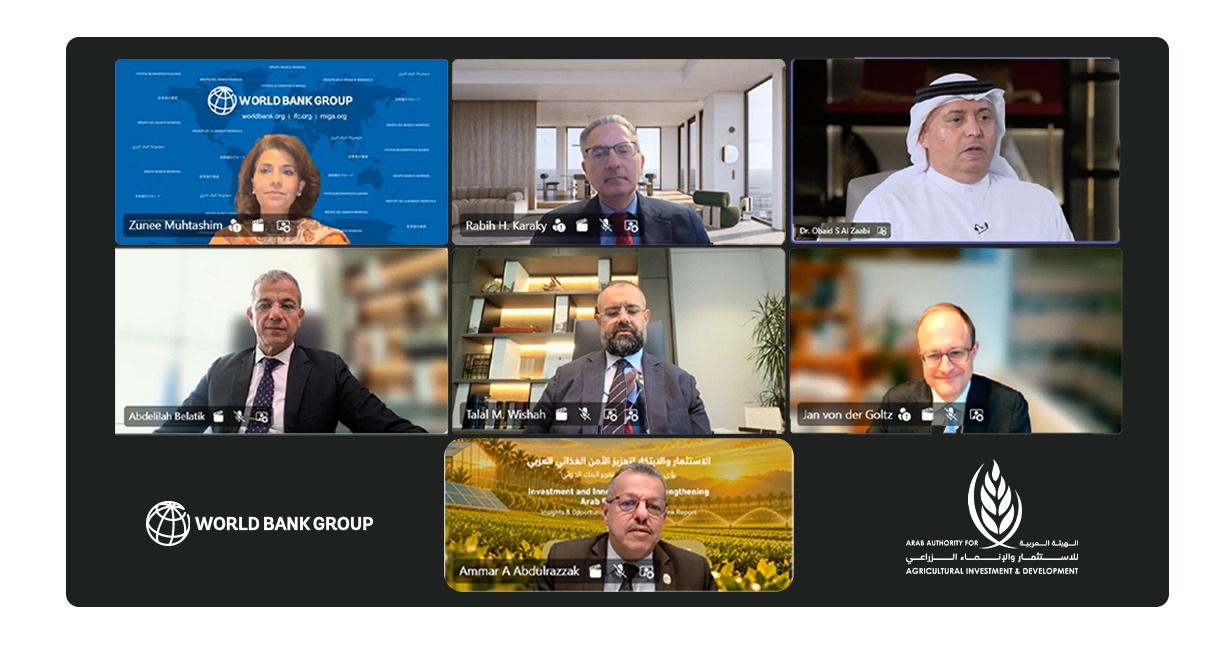
الهيئة العربية للاستثمار والإنماء الزراعي والبنك الدولي ينظمان ورشة افتراضية حول الاستثمار والابتكار لتعزيز الأمن الغذائي العربي
دبي :
نظمت الهيئة العربية للاستثمار والإنماء الزراعي، بالتعاون مع مجموعة البنك الدولي، ورشة عمل افتراضية بعنوان »الاستثمار والابتكار لتعزيز الأمن الغذائي العربي: رؤى وفرص في ضوء تقرير البنك الدولي «بمشاركة خبراء من البنك الدولي ومؤسسة التمويل الدولية، لبحث فرص الاستثمار في النظم الزراعية والغذائية، واستكشاف سبل توظيف الابتكار والتكنولوجيا وتعزيز مشاركة القطاع الخاص في دعم الأمن الغذائي وخلق فرص العمل.
وأكد الدكتور عبيد سيف حمد الزعابي، رئيس مجلس إدارة الهيئة العربية للاستثمار والإنماء الزراعي، أهمية تعزيز الاستثمارات في القطاعات الزراعية والغذائية العربية، وتوظيف الابتكار والتكنولوجيا الحديثة لتطوير النظم الزراعية والغذائية وتعزيز كفاءتها واستدامتها. وأشار إلى أهمية الانتقال من تبادل الخبرات والتواصل المؤسسي إلى شراكات عملية تفضي إلى تطوير فرص ومشروعات استثمارية مشتركة، بالاستفادة من خبرة الهيئة الممتدة لنحو 50 عامًا في المنطقة العربية ومعرفتها بالأسواق المحلية واحتياجاتها، وبالتكامل مع القدرات التمويلية والفنية لمجموعة البنك الدولي ومؤسسة التمويل الدولية، بما يسهم في تعزيز الأمن الغذائي ودعم التنمية المستدامة في المنطقة العربية.
وشهدت الورشة كلمة رئيسية للدكتور ربيع كركي، مدير قطاع الزراعة والغذاء لمنطقة الشرق الأوسط وشمال أفريقيا وأفغانستان وباكستان في البنك الدولي، تناولت موضوعات التقرير الإقليمي الصادر عن البنك الدولي في يونيو 2026 بعنوان »بناء الأمن الغذائي وخلق فرص العمل: مسارات السياسات لمنطقة الشرق الأوسط وشمال أفريقيا وأفغانستان وباكستان«، والذي يستعرض مسارات السياسات والاستثمارات اللازمة لتعزيز الأمن الغذائي والتغذوي، وتطوير النظم الزراعية والغذائية، وتوسيع فرص العمل في المنطقة، إلى جانب أهمية التجارة الإقليمية والاستفادة من المزايا النسبية للدول العربية.
وتضمّنت الورشة عرضين متخصصين؛ ركّز الأول، الذي قدّمه الدكتور يان فون دير غولتز، الخبير الاقتصادي الأول بالبنك الدولي، على واقع الأمن الغذائي وفرص تعزيز الإنتاج المحلي في منطقة الشرق الأوسط وشمال أفريقيا وأفغانستان وباكستان، فيما استعرض العرض الثاني، الذي قدّمته السيدة زونيه محتشم، مسؤولة الاستثمار الرئيسية بمؤسسة التمويل الدولية (IFC)، انعكاسات مبادرةAgriConnect التابعة للبنك الدولي على تحفيز الاستثمارات وتعزيز دور القطاع الخاص في تطوير القطاع الزراعي، بما يسهم تطوير النظم الزراعية والغذائية وتحسين الأمن الغذائي وخلق فرص العمل.
وركزت المناقشات على دور الابتكار والتكنولوجيا في رفع الإنتاجية وتحسين كفاءة استخدام الموارد، ولا سيما المياه، إلى جانب تطوير سلاسل القيمة، وتحسين كفاءة التخزين والخدمات اللوجستية والتجارة، وتعزيز دور القطاع الخاص في الاستثمار. كما تناول المشاركون آليات التمويل وأدوات تخفيف المخاطر التي يمكن أن تساعد في تحويل الفرص الواعدة إلى مشروعات استثمارية قابلة للتمويل والتنفيذ، مع تحقيق التوازن بين الجدوى الاقتصادية والأثر التنموي.
وشكّلت الورشة منصة لتبادل الخبرات والرؤى بشأن الاستفادة من نتائج التقرير في تحديد أولويات الاستثمار، ومعالجة الفجوات التي قد تعوق تطوير المشروعات وتوسّعها، وتعزيز التكامل بين المؤسسات التمويلية والتنموية والجهات البحثية والقطاع الخاص. كما أتاحت للمشاركين مناقشة فرص التعاون في تطوير المشروعات وبناء القدرات، وربط الاستثمارات بالمنتجين والمزارعين واحتياجات الأسواق المحلية.
وشهدت الورشة مشاركة نخبة من الخبراء والمتخصصين وممثلي المؤسسات الإقليمية والدولية، من بينهم ممثلين عن البنك الأفريقي للتنمية، والمؤسسة الدولية الإسلامية لتمويل التجارة، ومنظمة الأغذية والزراعة للأمم المتحدة، إلى جانب ممثلين عن جامعة الإمارات العربية المتحدة، وجامعة الخرطوم، وجامعة بغداد، ومركز بحوث الصحراء، وعدد من هيئات البحوث الزراعية، فضلًا عن رؤساء تنفيذيين ومديرين عامين ومتخصصين في مجالات الاستثمار والأمن الغذائي.
وتأتي هذه الورشة في إطار توجه الهيئة العربية للاستثمار والإنماء الزراعي نحو تعزيز التعاون مع المؤسسات الدولية والاستفادة من المعرفة المتخصصة والتحليلات الاقتصادية في دعم توجهاتها الاستثمارية، واستكشاف الفرص المستقبلية في القطاعات المرتبطة بالأمن الغذائي، بما يسهم في تطوير نظم زراعية وغذائية أكثر كفاءة واستدامة، وتعزيز دور الاستثمار في دعم الأمن الغذائي في المنطقة العربية.
AAAID and World Bank Group Hold Virtual Workshop on Investment and Innovation to Strengthen Arab Food Security
Dubai, October 28, 2026
The Arab Authority for Agricultural Investment and Development (AAAID), in collaboration with the World Bank Group, held a virtual workshop titled “Investment and Innovation for Strengthening Arab Food Security: Insights and Opportunities from the World Bank Report.” The workshop brought together experts from the World Bank and the International Finance Corporation (IFC) to explore investment opportunities across agrifood systems and discuss how innovation, technology, and greater private sector participation can help strengthen food security and create jobs.
H.E. Dr. Obaid Saif Hamad Al Zaabi, Chairman of the Board of AAAID, emphasized the importance of increasing investment in the Arab agrifood sector and harnessing innovation and modern technologies to develop more efficient and sustainable agrifood systems. He highlighted the need to move beyond institutional dialogue and knowledge exchange toward practical partnerships that can translate into jointly developed and implemented investment projects. Such partnerships, he noted, could build on AAAID’s nearly 50 years of experience in the Arab region and its understanding of local markets and community needs, while leveraging the financing and technical expertise of the World Bank Group and IFC. This complementary approach can help advance investment opportunities that contribute to food security and sustainable development across the Arab region.
The workshop featured a keynote address by Dr. Rabih Karaky, Regional Practice Manager for Agriculture and Food in the World Bank’s Middle East, North Africa, Afghanistan and Pakistan (MENAAP) Region. He discussed key findings and policy priorities from the World Bank’s June 2026 regional report, Building Food Security, Creating Jobs: Policy Pathways for the Region. The report examines policy pathways and investment priorities to strengthen food and nutrition security, transform agrifood systems, and expand employment opportunities across the region. It also highlights the role of regional trade and countries’ comparative advantages in improving food security and strengthening the resilience of food supply systems.
The workshop included two technical presentations. The first, delivered by Jan von der Goltz, Senior Economist at the World Bank, examined food security challenges and opportunities to strengthen domestic food production across the MENAAP region. The second, delivered by Zunee Muhtashim, Principal Investment Officer at IFC in Karachi, Pakistan, explored the role of AgriConnect, a World Bank Group initiative, in mobilizing investment, strengthening private sector engagement, and supporting the transformation of agrifood systems to improve food security and create jobs.
Discussions focused on the role of innovation and technology in raising productivity and improving resource-use efficiency, particularly water use. Participants also examined opportunities to strengthen agrifood value chains, improve storage, logistics and trade, and expand private sector investment. Financing mechanisms and risk-mitigation instruments were discussed as important means of translating promising opportunities into bankable and implementable investment projects, while balancing commercial viability with development impact.
The workshop provided a platform for exchanging knowledge and perspectives on how the report’s findings could inform investment priorities, address constraints to project development and scale-up, and strengthen collaboration among development finance institutions, research organizations, and the private sector. Participants also explored opportunities for joint project development, technical and institutional capacity building, and stronger links between investment, producers, farmers, and local market needs.
Participants included representatives of the African Development Bank, the International Islamic Trade Finance Corporation (ITFC), and the Food and Agriculture Organization of the United Nations (FAO), as well as representatives from United Arab Emirates University, the University of Khartoum, the University of Baghdad, the Desert Research Center, and agricultural research institutions. The workshop also brought together chief executives, general managers, and specialists in investment and food security.
The workshop forms part of AAAID’s broader efforts to strengthen cooperation with international financial and development institutions and draw on specialized knowledge and economic analysis to inform its investment priorities. Through these partnerships, AAAID aims to identify and develop investment opportunities across food security-related sectors, support more efficient and sustainable agrifood systems, and strengthen the contribution of investment to food security and job creation across the Arab region.