
«ستاندرد آند بورز» تمنح الهيئة العربية للاستثمار والأمن الغذائي تصنيفاً ائتمانياً بدرجة «A» مع نظرة مستقبلية مستقرة
دبي :
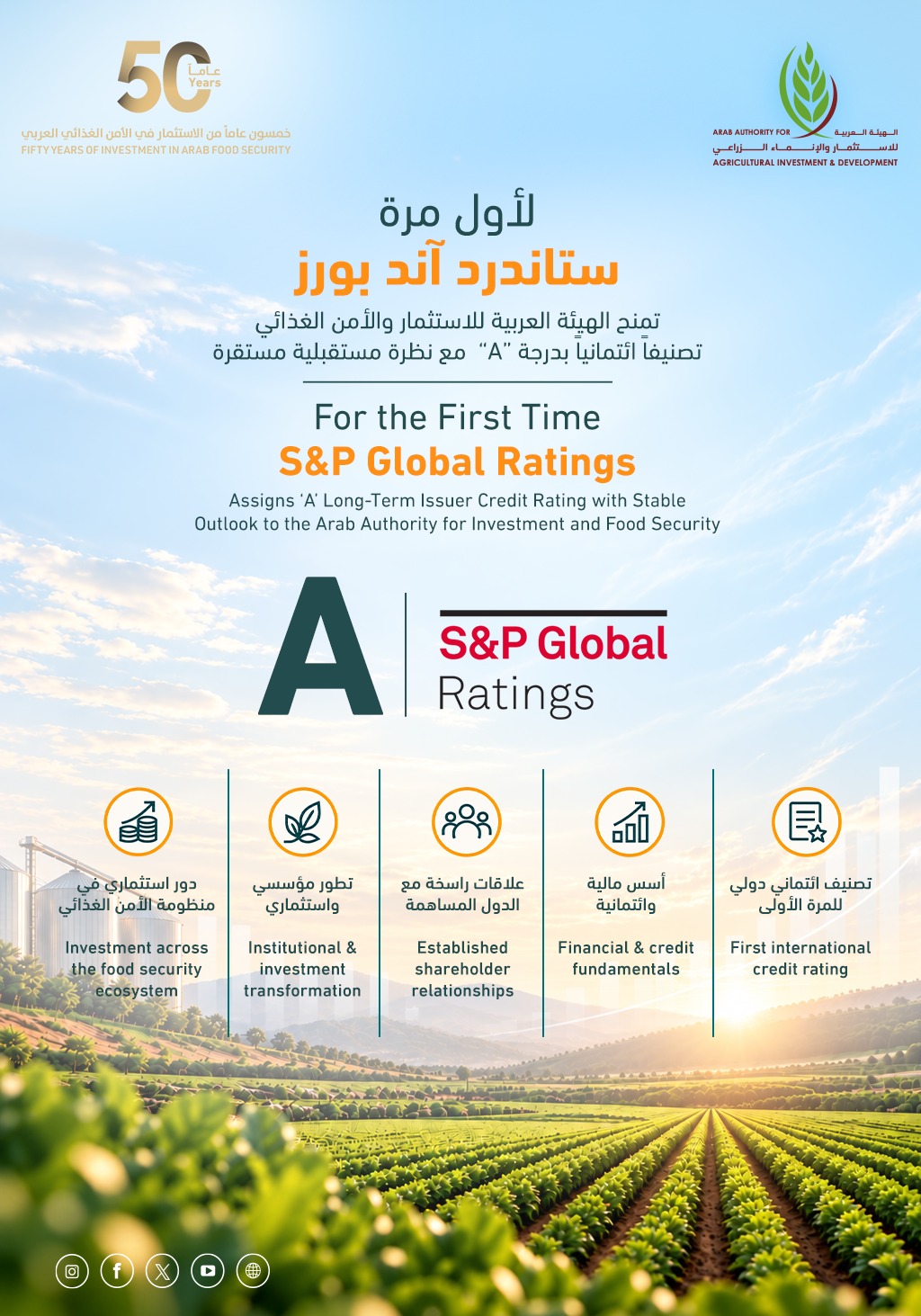
تصنيف ائتماني دولي للمرة الأولى: وكالة «ستاندرد آند بورز» تُمنح الهيئة تصنيفاً ائتمانياً طويل الأجل بدرجة «A» مع نظرة مستقبلية مستقرة.
أسس مالية وائتمانية: استند التصنيف إلى تقييم الوكالة لملف مخاطر أعمال الهيئة بأنه ملائم، وملف مخاطرها المالية بأنه قوي، في ضوء عوامل تشمل قوة تغطية السيولة، وملفها التمويلي.
علاقات راسخة مع الدول المساهمة: أشار التقرير إلى قوة علاقات الهيئة مع الدول المساهمة، وما يمثله التزام هذه الدول بتوفير رأس المال من عامل دعم لملف الهيئة الائتماني.
تطور مؤسسي واستثماري: يأتي التصنيف في سياق التحول المؤسسي للهيئة تحت هويتها الجديدة «مَير»، وتطوير أطر الحوكمة والتشغيل وإدارة المخاطر.
دور استثماري في منظومة الأمن الغذائي: تواصل الهيئة توجيه استثماراتها نحو الشركات والقطاعات المرتبطة بالأمن الغذائي في الدول العربية، والعمل على حشد استثمارات إضافية من الحكومات ومؤسسات التمويل التنموي والقطاع الخاص.
دبي، 28 أكتوبر 2026
حصلت الهيئة العربية للاستثمار والأمن الغذائي (مَير)، المعروفة سابقاً باسم الهيئة العربية للاستثمار والإنماء الزراعي، على تصنيف ائتماني طويل الأجل بدرجة (A) مع نظرة مستقبلية مستقرة (A/Stable)، من وكالة ستاندرد آند بورز (S&P Global Ratings) العالمية، وذلك للمرة الأولى في تاريخها.
ويمثل هذا التصنيف محطة مهمة في مسيرة الهيئة المؤسسية، ويعكس تقييم الوكالة لملف مخاطر أعمال الهيئة بأنه ملائم، وملف مخاطرها المالية بأنه قوي، في ضوء مجموعة من العوامل، من بينها قوة تغطية السيولة، والملف التمويلي المتحفظ القائم أساساً على تمويل المساهمين، إلى جانب العلاقات الراسخة مع الدول المساهمة وأهمية الدعم الذي تتلقاه الهيئة منها.
وتعكس النظرة المستقبلية المستقرة توقعات الوكالة باستقرار مستويات الرسملة لدى الهيئة، بالتوازي مع استمرار توسع ميزانيتها العمومية واستمرار الاستفادة من دعم الدول المساهمة.
وبهذه المناسبة قال سعادة الدكتور عبيد سيف حمد الزعابي، رئيس مجلس إدارة الهيئة العربية للاستثمار والأمن الغذائي (مَــير): “يمثل حصول الهيئة على تصنيف ائتماني بدرجة (A) مع نظرة مستقبلية مستقرة من وكالة “ستاندرد آند بورز” محطة مهمة في مسيرتها المؤسسية، ويعكس أهمية مواصلة تطوير منظومتها المالية وتعزيز أطر الحوكمة وإدارة المخاطر وفق أفضل الممارسات الدولية.
وننظر إلى هذا التصنيف باعتباره مسؤولية مؤسسية تدفعنا إلى مواصلة العمل على ترسيخ الانضباط المالي، وتعزيز ثقة شركائنا، وتطوير علاقاتنا مع المؤسسات المالية والاستثمارية الإقليمية والدولية.
وستواصل الهيئة التركيز على كفاءة تخصيص رأس المال، وتطوير محفظتها الاستثمارية، وتعزيز دورها في حشد الاستثمارات التي تسهم في دعم الأمن الغذائي المستدام في الدول العربية، بما يحقق قيمة اقتصادية وتنموية مستدامة للدول الأعضاء”.
وأوضح التقرير أن الهيئة تضطلع بدور استثماري متخصص في توفير رأس المال طويل الأجل للشركات العاملة في القطاعات المرتبطة بالأمن الغذائي. ويتيح نموذجها الاستثماري دعم أنشطة قد لا تحظى بالقدر نفسه من التمويل من المؤسسات المالية التجارية، بالنظر إلى طبيعة مخاطرها وآفاقها الزمنية واحتياجاتها التنموية.
كما أشار التقرير إلى خطط الهيئة الاستثمارية للفترة 2026–2028، التي تستهدف تعزيز التنوع الجغرافي لاستثماراتها وتوسيع حضورها في عدد من الدول العربية، من خلال استثمارات ذات أولوية في قطاعات الإنتاج النباتي والحيواني، والتصنيع الزراعي، والتمويل الأصغر، ومصايد الأسماك، إلى جانب العمل على تعبئة تمويل إضافي من مؤسسات التمويل التنموي والقطاع الخاص.
ويأتي هذا التصنيف في سياق التحول المؤسسي الذي شهدته الهيئة منذ عام 2024، بما في ذلك تطوير هويتها المؤسسية تحت اسم «مَير»، وإعادة هيكلة عملياتها وأطر الحوكمة وإدارة المخاطر، وتطوير نهجها في إدارة المحفظة الاستثمارية.
وتعكس الهوية المؤسسية الجديدة «مَير» توجهاً نحو مقاربة استثمارية شاملة للأمن الغذائي، تنطلق من الترابط بين الاستثمار والقدرات الإنتاجية وسلاسل القيمة، ولا تقتصر على الإنتاج الزراعي وحده، بل تشمل الشركات والقطاعات ذات الصلة بالأمن الغذائي، بما في ذلك الإنتاج النباتي والحيواني والتصنيع الغذائي والأنشطة الداعمة للمنظومة.
ومن خلال استثماراتها وشراكاتها، تواصل الهيئة العمل على دعم الأمن الغذائي المستدام في الدول العربية، وتعزيز دور الاستثمار طويل الأجل في تطوير القدرات الإنتاجية وسلاسل القيمة، والمساهمة في حشد الموارد المالية اللازمة لتحقيق أثر اقتصادي وتنموي مستدام للدول الأعضاء.
نبذة عن الهيئة
الهيئة العربية للاستثمار والأمن الغذائي (مَير)، المعروفة سابقاً باسم الهيئة العربية للاستثمار والإنماء الزراعي، مؤسسة مالية واستثمارية عربية متعددة الأطراف تأسست عام 1976، وتضم في عضويتها 21 دولة عربية.
وتعمل الهيئة على دعم الأمن الغذائي في الدول العربية من خلال الاستثمار في الشركات والمشروعات والقطاعات المرتبطة به، وتطوير الشراكات، وتعزيز سلاسل القيمة ذات الصلة. وتعتمد الهيئة نهجاً استثمارياً طويل الأجل يهدف إلى المساهمة في تطوير منظومة الأمن الغذائي، وتعبئة الاستثمارات، وتحقيق قيمة اقتصادية وتنموية مستدامة للدول الأعضاء.
S&P Global Ratings Assigns ‘A’ Long-Term Issuer Credit Rating with Stable Outlook to the Arab Authority for Investment and Food Security
First international credit rating: S&P Global Ratings has assigned the Arab Authority for Investment and Food Security (MAYR) an ‘A’ long-term issuer credit rating with a stable outlook for the first time.
Financial and credit fundamentals: The rating reflects S&P Global Ratings’ assessment of MAYR’s enterprise risk profile as adequate and its financial risk profile as strong, supported by very strong liquidity coverage and a conservative funding profile.
Established shareholder relationships: The report highlights MAYR’s strong relationships with its shareholders and the support provided by their commitment to capital contributions.
Institutional and investment transformation: The rating comes amid MAYR’s institutional transformation under its new identity, alongside the continued development of its governance, operational and risk management frameworks.
Investment across the food security ecosystem: MAYR continues to invest in companies and sectors related to food security across Arab countries and to mobilize additional investment from governments, development finance institutions and the private sector.
Dubai, 28 October 2026
S&P Global Ratings has assigned the Arab Authority for Investment and Food Security (MAYR), formerly known as the Arab Authority for Agricultural Investment and Development, an ‘A’ long-term issuer credit rating with a stable outlook, marking the first time the Authority has received a credit rating from the agency. The rating was assigned on October 19, 2026.
The rating marks an important milestone in MAYR’s institutional development. It reflects S&P Global Ratings’ assessment of the Authority’s enterprise risk profile as adequate and its financial risk profile as strong, taking into account several factors, including very strong liquidity coverage, a conservative funding profile primarily based on shareholder funding, and established relationships with its shareholders and the support they provide.
The stable outlook reflects S&P Global Ratings’ expectation that MAYR will maintain steady levels of capitalization as its balance sheet expands and it continues to benefit from shareholder support.
Commenting on the rating, H.E. Dr. Obaid Saif Hamad Al Zaabi, Chairman of the Board of the Arab Authority for Investment and Food Security (MAYR), said: “Achieving an ‘A’ credit rating with a stable outlook from S&P Global Ratings marks an important milestone in the Authority’s institutional journey. It underscores the importance of continuing to strengthen our financial framework and enhance our governance and risk management practices in line with international best practices.
“We view this rating as an institutional responsibility that reinforces our commitment to financial discipline, strengthens the confidence of our partners, and supports the development of our relationships with regional and international financial and investment institutions.
“The Authority will continue to focus on efficient capital allocation, the development of its investment portfolio, and mobilizing investment that contributes to sustainable food security across Arab countries, while creating lasting economic and development value for its member states”.
The report highlights MAYR’s specialized investment mandate, which involves providing long-term capital to companies operating in sectors related to food security. Its investment model enables the Authority to support activities that may have more limited access to commercial financing, given their risk profiles, investment horizons and development needs.
The report also outlines MAYR’s investment pipeline for 2026–2028, which focuses on geographic diversification and expanding the Authority’s presence across Arab countries. Priority investments span crop and animal production, agri-manufacturing, microfinance and fisheries. The Authority also aims to mobilize additional financing from development finance institutions and the private sector.
The rating comes amid the institutional transformation MAYR has undertaken since 2024, including the development of its new institutional identity, the restructuring of its operations and governance frameworks, and enhancements to its risk and portfolio management practices.
MAYR’s new institutional identity reflects a comprehensive investment approach to food security, recognizing the interconnected roles of investment, productive capacity and value chains. Its scope extends beyond agricultural production to encompass companies and sectors associated with food security, including crop and animal production, food processing and activities that support the broader food security ecosystem.
Through its investments and partnerships, MAYR continues to support sustainable food security across Arab countries, strengthen the role of long-term investment in developing productive capacity and value chains, and contribute to mobilizing financial resources that generate sustainable economic and development outcomes for its member states.
About MAYR
The Arab Authority for Investment and Food Security (MAYR), formerly known as the Arab Authority for Agricultural Investment and Development, is a multilateral Arab financial and investment institution established in 1976. It comprises 21 Arab member states.
MAYR supports food security across Arab countries through investments in companies, projects and sectors related to food security, the development of partnerships, and the strengthening of associated value chains. Through its long-term investment approach, the Authority seeks to contribute to the development of the food security ecosystem, mobilize investment and generate sustainable economic and development value for its member states.